
Australia, Canada, Distributor guide, Ireland, NZ, UK, USA

Ten things to define before you order stable mats for your market

A container of mats is only as good as the order behind it. Most problems that delay a stable mat programme are not manufacturing problems — they are decisions that were never written down.

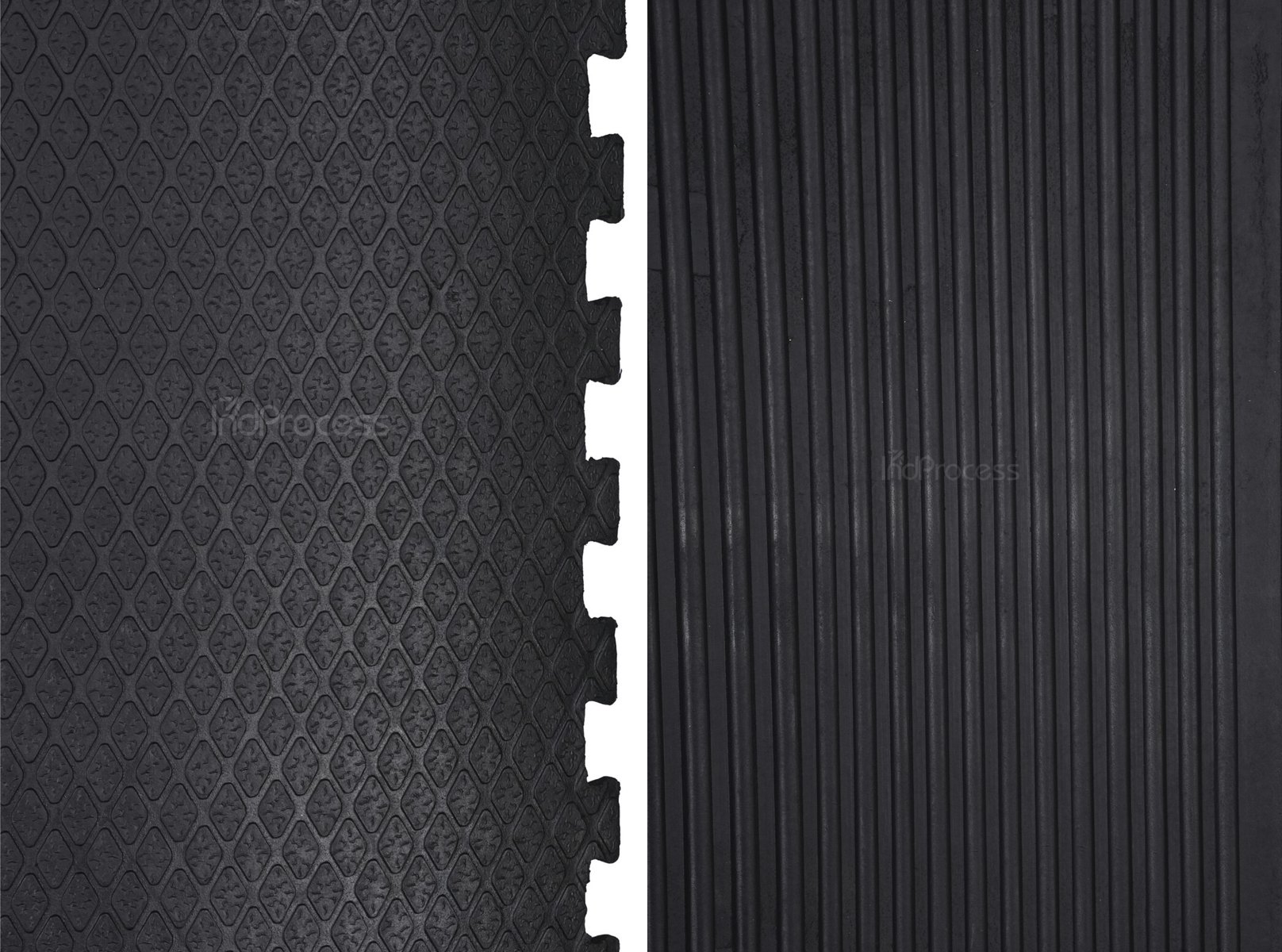
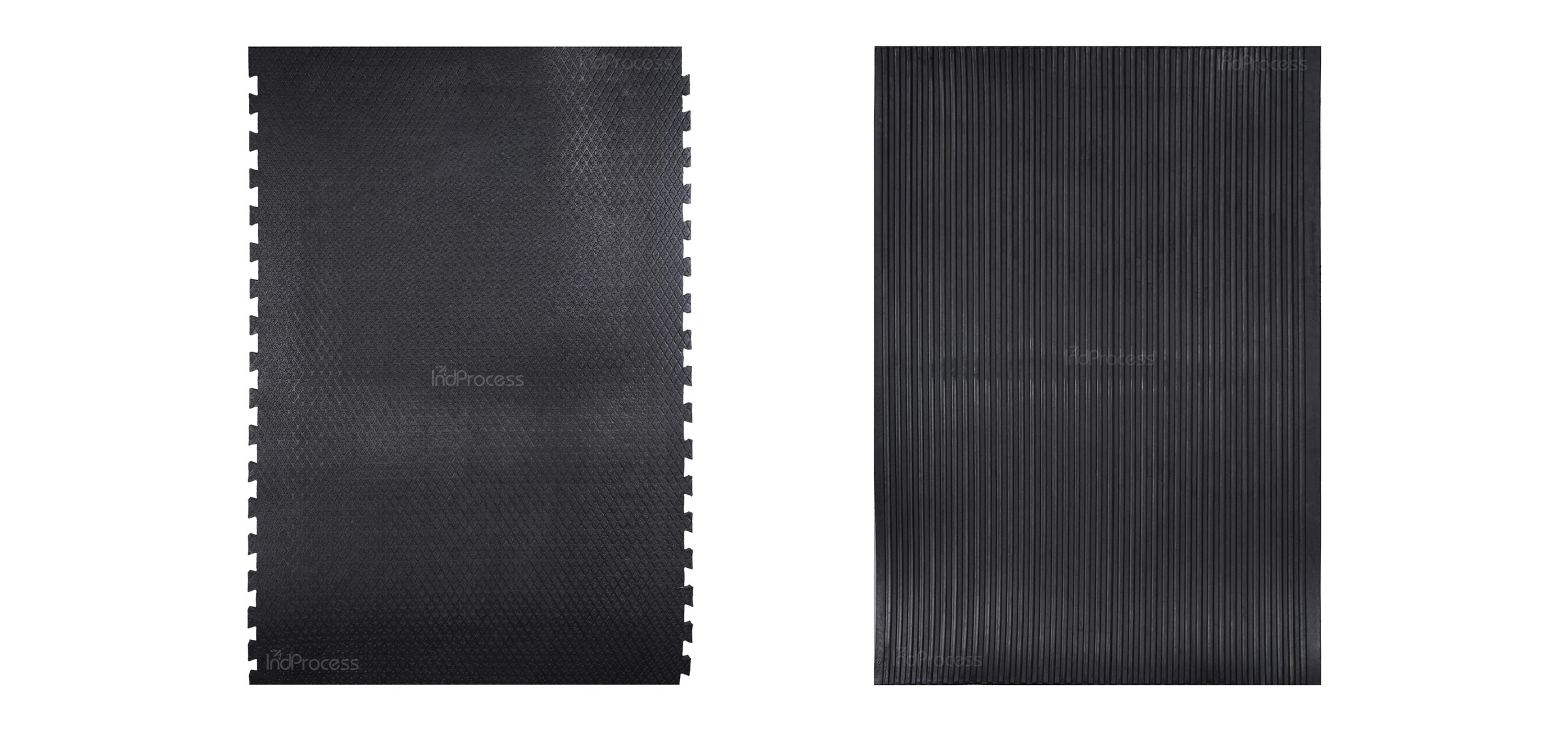
Diamond top with rib bottom mat: top surface with interlocking edges (left) and ribbed underside (right). A stable mat is the sum of a dozen decisions; most are invisible once the bedding goes down.

Diamond top with rib bottom mat: top surface with interlocking edges (left) and ribbed underside (right). A stable mat is the sum of a dozen decisions; most are invisible once the bedding goes down.

KEY TAKEAWAYS

  • Most delays in a stable mat programme come from an incomplete order, not from production.
  • Specify size against the stables in your market, thickness against the use, and edges before sampling.
  • Weight, packing and labelling decide how easily mats move through your warehouse and your retailers.
  • Keep one approved sample on each side so the second order matches the first.

The first container arrives and the mats are good. Not wrong, exactly — the rubber is sound, the surface is right — but the size does not suit the stables your customers actually have, the pallets are heavier than your warehouse team expected, and there is no product sheet to put in front of a retailer.

None of that is a manufacturing fault. It is the predictable result of an order that named a product and a quantity and left everything else to interpretation.

A stable mat looks like a simple product. It is not. It carries a surprising number of decisions, and every one left unstated is a decision the factory makes on the distributor’s behalf. What follows is the specification we would like to receive with every enquiry.

Size and layout

Mat dimensions

Start with the stables your customers own, not with a catalogue. A 12 × 12 ft stall is common in North America, and similar box sizes are common in the UK and Ireland, but older yards and converted buildings rarely match any standard. State the mat size you want, and tell us which stable sizes it needs to cover with the fewest cuts.

Thickness

State the thickness your market expects, not a range of “standard”. A mat for a stable where horses stand for long winter hours, one for a wash bay, and one for a horsebox floor are different decisions. Tell us where the mat will be used and we will tell you what fits.

Edges

Straight edges or interlocking. Each installs differently and each suits a different customer. Decide this before sampling, because it changes the product, the packing and the installation guide.

Surface

Top pattern

The pattern on the upper face affects grip under hoof and how easily the mat is swept and washed. Choose it against how your customers clean their stables.

Underside

The underside determines how the mat sits on the base and how moisture moves beneath it. On an uneven or porous base this matters as much as the top.

Diamond top with rib bottom mat: the diamond-pattern top with its interlocking edge (left) and the ribbed underside (right).

Handling and packing

Weight per mat

A stable mat is heavy by design. Ask for the weight per mat, because it decides how your warehouse handles stock, how retailers display it, and whether one person can install it.

Packing for export

Mats travel a long way by sea. Agree how they are stacked, palletised and loaded so they arrive flat, with no curled corners and no damaged edges.

Labelling

Product name, size and batch identification on every pallet, in the terms your market uses. A label that says “cow mat” on a pallet bound for an equestrian retailer is a small error that costs a sale.

A specification is not paperwork. It is the fastest route to the product you already had in mind.

Documentation

Retailers sell what they can explain. Ask for a product sheet you can pass on, an installation guide written for your customers, and care instructions. If these are needed in your own branding, say so at the start.

The order in one page

Send these ten lines with your enquiry and the first sample will usually be the last.

  • Mat size — and the stable sizes it must cover.
  • Thickness — stated against the use: stable, wash bay or horsebox.
  • Edges — straight or interlocking.
  • Top pattern — chosen against how customers clean.
  • Underside — suited to the bases in your market.
  • Weight per mat — confirmed before you plan handling.
  • Packing — stacking, pallets and container loading.
  • Labelling — in your market’s vocabulary.
  • Documentation — product sheet, installation and care guides.
  • Approved sample — one retained by each side.
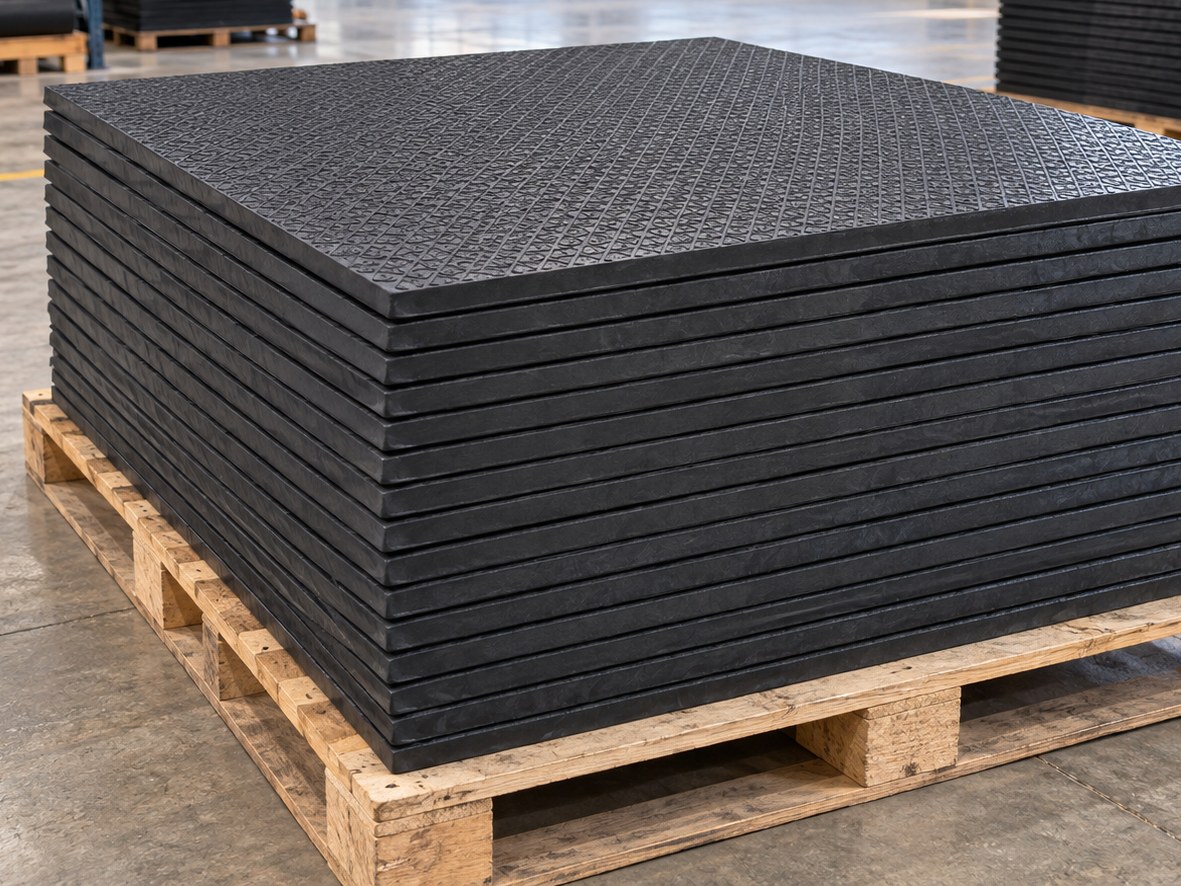
Rubber stable mats stacked flat on a pallet for dispatch

Packing is part of the product. A mat that arrives curled is a mat that is hard to sell.

What is not on the list, and should be discussed

Two things sit outside the specification but shape it.

The first is volume across the season. A single large order and a series of smaller ones timed to your buying window lead to different packing, different lead times and different stock risk. Tell us which you intend.

The second is tolerance. Every dimension carries one. Agreeing tolerances at sampling, and keeping an approved physical sample on both sides, ends most disagreements before they start.

None of this makes the commercial decision for you. It simply ensures that what arrives is what you intended, and that the second container matches the first.

Frequently asked questions

The ten lines in the checklist above: size, thickness, edges, top pattern, underside, weight, packing, labelling, documentation and an agreed approved sample. Even a partial list shortens the sampling process.

Weight decides how mats are stored, how many fit on a pallet, how retailers display them and whether one person can install them. Confirm it before planning handling and freight.

A product sheet you can pass to retailers, an installation guide written for end customers, and care instructions. If you need them in your own branding, ask at the start.

Yes. We recommend assessing samples in your own market conditions before discussing volumes. Contact us at marketing@indprocess.in.

Product in this article

Diamond top with rib bottom mat

The Diamond Top with Rib Bottom Mat is a durable and versatile rubber mat designed for heavy-duty use. Its diamond-patterned top surface offers excellent slip resistance and enhanced grip, while the ribbed underside provides stability, cushioning, and effective drainage. Ideal for industrial floors, workshops, gyms, and high-traffic areas, this mat ensures safety, comfort, and long-lasting performance.

Planning a stable mat order

Send us your specification — or the ten lines above — and we will come back with samples and an honest view on anything in the order that could cause a problem later.

Indprocess Innovations Pvt. Ltd. · ISO 9001:2015 certified (Reg. No. RQ91/1154) manufacturer of rubber and metal products · Tumakuru, Karnataka, India