

Two hemispheres, two winters: when distributors should order stable mats

Stable mats are bought ahead of need. For distributors across six markets and two hemispheres, the date that matters is not when winter starts — it is when customers start preparing for it.
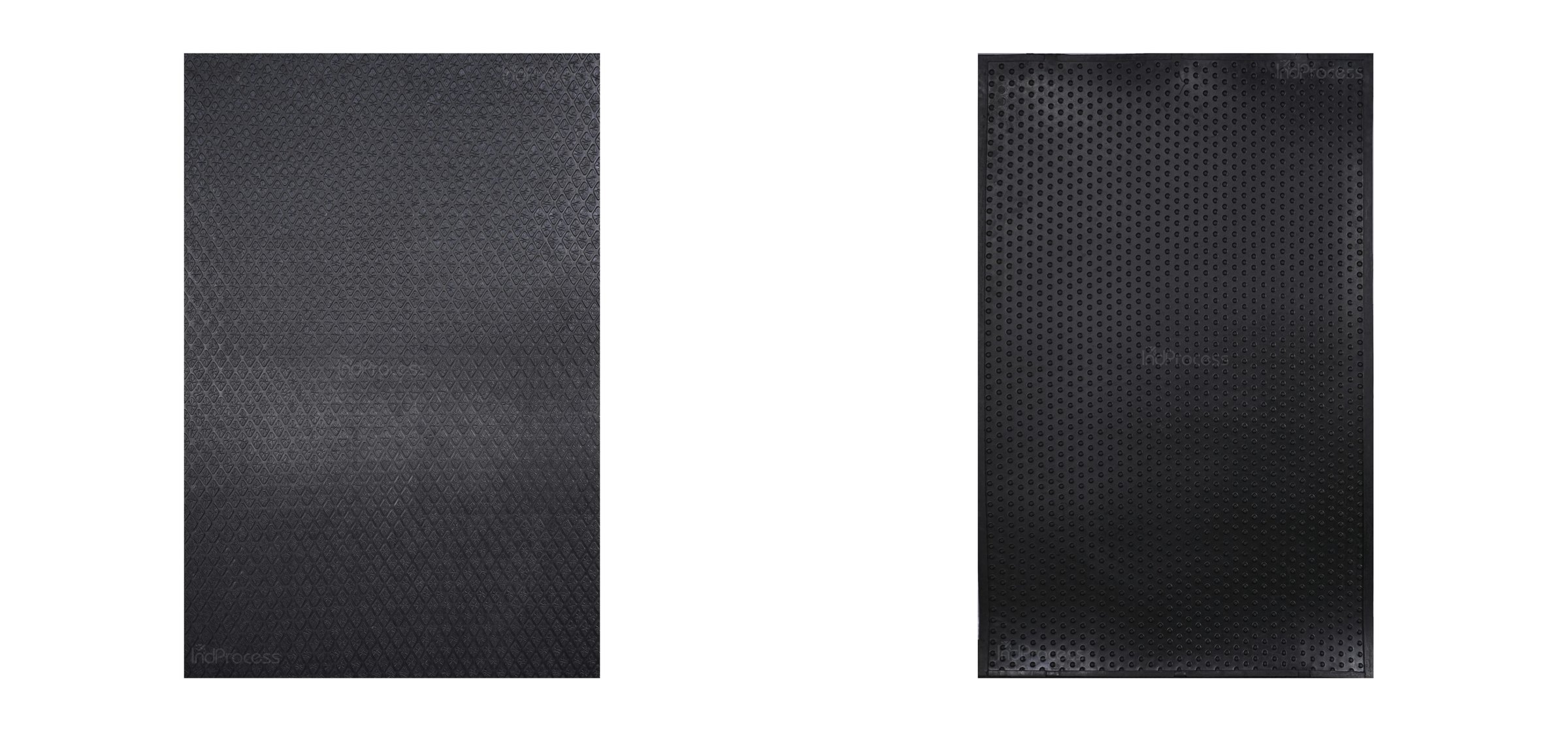
Diamond top with stud bottom mat: top surface (left) and studded underside (right). Northern yards prepare for winter as southern yards turn out for spring; the product is the same, the calendar is not.
KEY TAKEAWAYS
- Customers buy stable mats before the stabling season, not during it.
- UK, Ireland, USA and Canada buy from August to October; Australia and New Zealand from March to May.
- Work backwards from the buying window: production, sea freight, clearance and delivery.
- Opposite seasons spread production across the year, so early orders secure earlier production slots.
In October, a yard owner in Kildare is lifting stable mats and checking the floor before the horses come in for winter. In the same week, a yard owner in Canterbury is doing the opposite — turning horses out into spring grass and looking at which stables need work before next year.
Same product. Same task. Six months apart.
For a manufacturer, this is not a curiosity. It is a planning fact. For a distributor, it decides when stock must be on the warehouse floor — and working that date backwards is the most useful calculation in the equestrian trade.
Demand follows the stabling season
Stable mats are bought ahead of need. Customers act in the weeks before horses spend long hours indoors, when the condition of the floor suddenly matters. By the time the weather turns, the buying decision has already been made — and it has been made with whichever retailer had stock.
That means the relevant date for a distributor is not when winter starts. It is when customers start preparing for it.
Stabling seasons and buying windows
Approximate timing across our six export markets. Local climate varies widely within each country.
|
Market |
Main stabling season |
Customer buying window |
Stock should be in place |
|---|---|---|---|
|
UK and Ireland |
October – March |
August – October |
By late summer |
|
USA |
November – March in colder states |
August – October |
By late summer |
|
Canada |
November – April |
August – October |
By mid-summer |
|
Australia |
May – August in southern states |
March – May |
By late summer (February) |
|
New Zealand |
May – August |
March – May |
By late summer (February) |
Working the date backwards
From the date stock must be in place, subtract three things: sea freight to your port, clearance and delivery to your warehouse, and production time at the factory. What is left is the date the order must be confirmed.
Most late stock is not caused by slow production or slow shipping. It is caused by an order confirmed a few weeks after that date, in the belief that there was still time.
The buying season does not wait for the container. The container has to wait for the buying season.

Diamond top with stud bottom mat: the diamond-pattern top (left) and the studded underside (right).
The advantage of two hemispheres
Opposite seasons are useful to a manufacturer. Production for the northern winter and production for the southern winter fall at different points in the year, which spreads the load across the factory calendar.
For distributors, the advantage is simpler: an order placed at the right time is not competing for the same production slot as every other order in the world. Planning early secures that slot.
Where the trade meets
Trade and consumer shows mark the points in the year when buyers are thinking about stock. In the UK, BETA International brings the equestrian trade to the NEC Birmingham each September. In North America, the Royal Agricultural Winter Fair in Toronto and Equine Affaire in Massachusetts both fall in November, with Equine Affaire returning to Columbus, Ohio in April. In Australia, EQUITANA Melbourne next runs in November 2027.
These dates are a reliable reminder: when the trade is gathering, the next season’s orders are already being discussed.
Before you confirm the season’s order
Six questions that keep stock arriving before demand does.
- When do your customers start buying? Not when winter starts.
- What is your sea freight time from India to your port?
- How long do clearance and delivery take to your warehouse?
- What production time has the factory confirmed for this order?
- Is one order enough, or is a second, smaller order needed mid-season?
- Is there an approved sample on file, so production can start without a new sampling round?
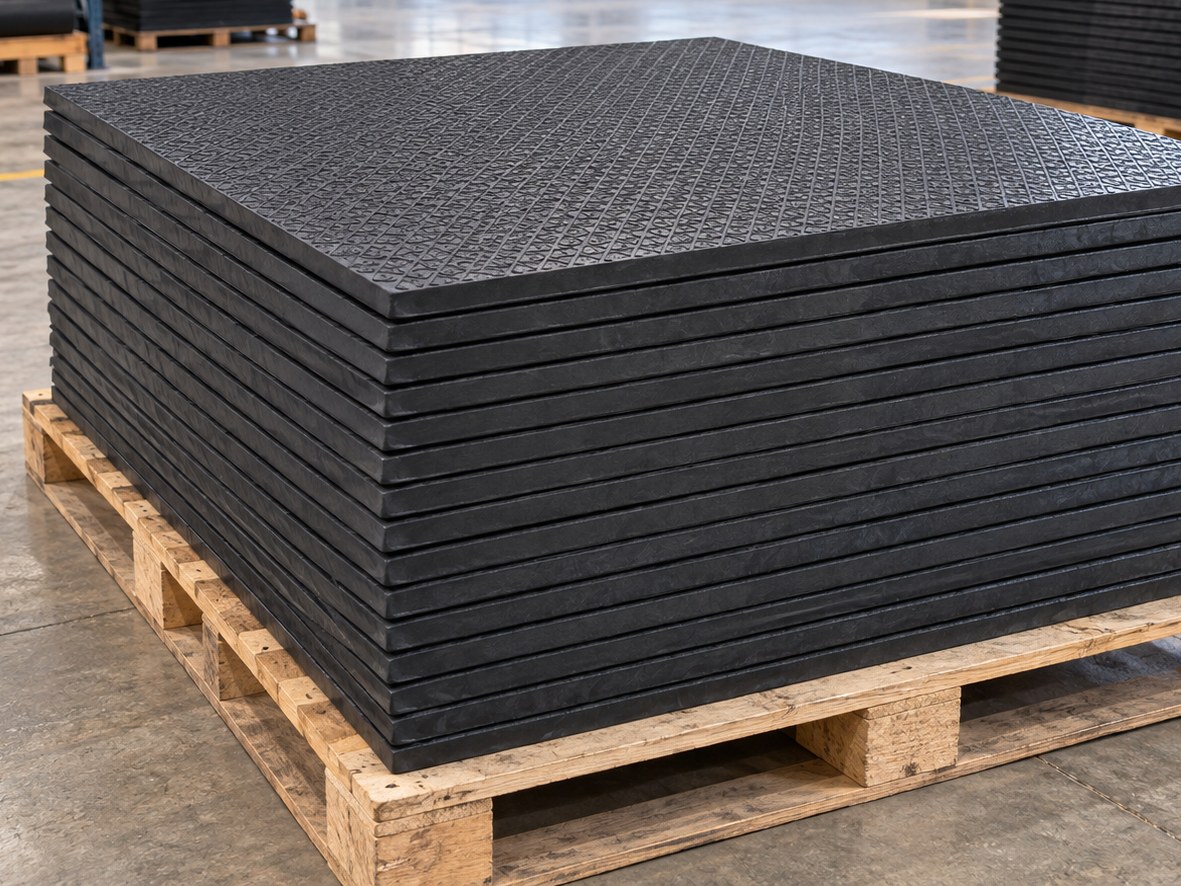
Production planned around the season, not around the deadline.
Where this fits
We manufacture rubber equestrian stable mats at our facility in Tumakuru, Karnataka, and supply them for export. Because we plan production around both the northern and the southern stabling seasons, we can agree an order date with each distributor that works back from their market’s buying window, rather than from ours.
Which is not a claim about speed. It is a claim about timing — and timing is what decides whether the mats are on the shelf when the customer walks in.
Frequently asked questions
When should UK and Irish distributors have stable mats in stock?
By late summer. Yard owners typically prepare stables for winter between August and October, so stock needs to be on the shelf before that window opens.
Why is the Australian and New Zealand buying window different?
The southern hemisphere winter runs from May to August, so preparation and buying happen between March and May — roughly six months offset from the UK, Ireland and North America.
What causes most late stock?
Rarely production or shipping on their own. Most late stock comes from an order confirmed a few weeks after the date it needed to be placed.
How do I agree an order timeline with Indprocess?
Tell us your market, your port and when your customers start buying. We will work back from that date with you. Contact marketing@indprocess.in.
Product in this article

Diamond top with stud bottom mat
The Diamond Top with Stud Bottom Mat features a rugged diamond-patterned surface for superior traction and slip resistance, paired with a studded underside that enhances grip, cushioning, and airflow. Designed for durability and comfort, it is ideal for industrial, commercial, and high-traffic environments where safety and performance are essential.
Planning next season’s stock
Tell us your market, your port and when your customers start buying. We will work back from that date and agree an order timeline with you.
Indprocess Innovations Pvt. Ltd. · ISO 9001:2015 certified (Reg. No. RQ91/1154) manufacturer of rubber and metal products · Tumakuru, Karnataka, India